
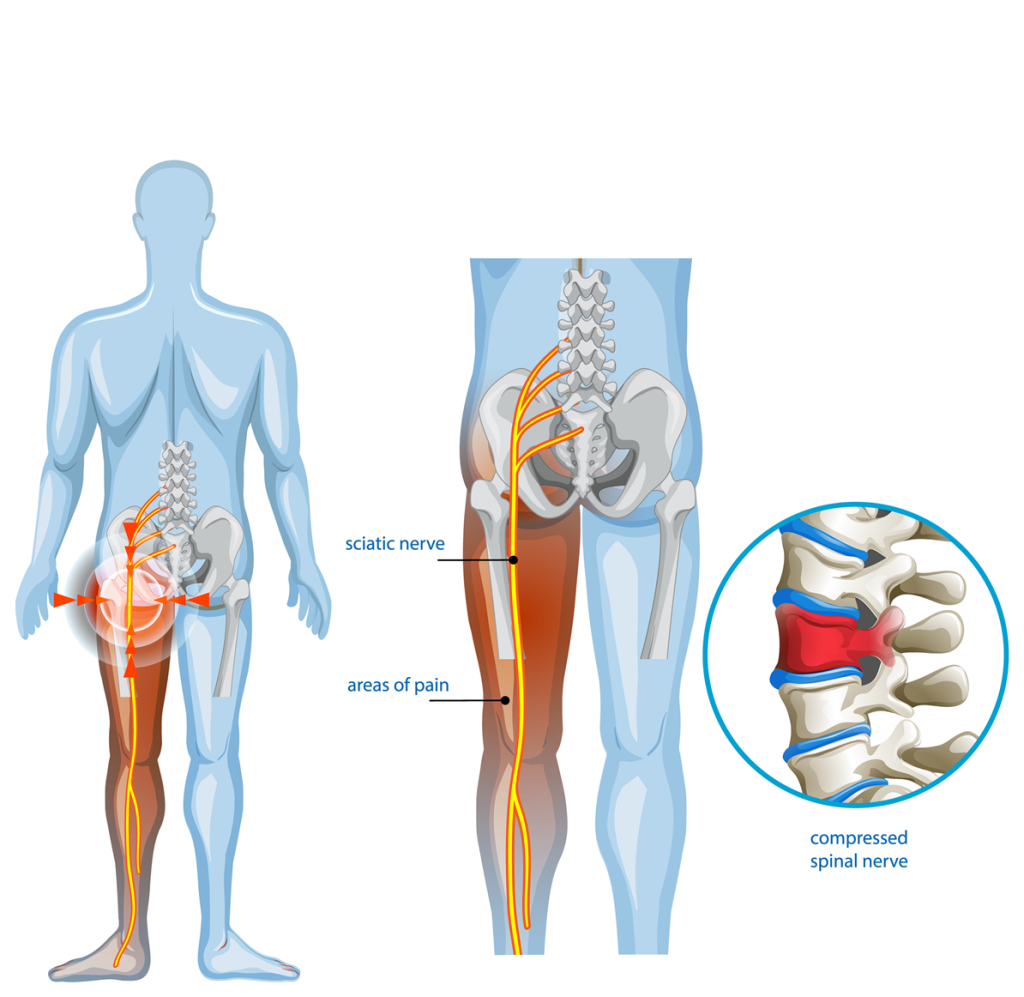
Sciatica is one of the most common and painful conditions treated in chiropractic offices. The term refers to pain that travels along the path of the sciatic nerve—the largest nerve in the body—which runs from the lower back through the hips, buttocks, and down each leg. While some people feel mild irritation, others experience burning, stabbing, or electric-like pain that can make standing, sitting, or walking extremely difficult.
Understanding why sciatica develops, what triggers flare-ups, and how chiropractic care helps relieve sciatic nerve pain is the first step toward long-lasting recovery.
Below is an explanation of the most common causes of sciatica, contributing factors, and natural treatment options.
Sciatica is not a diagnosis—it’s a symptom of irritation or compression of the sciatic nerve or the nerve roots in the lower spine. When these nerves become compressed, inflamed, or pinched, pain can radiate along the nerve pathway.
Sciatica can appear suddenly after an injury or develop gradually due to mechanical stress, posture, or degeneration.
One of the most common causes of sciatica is a herniated disc in the lumbar spine. Discs act as cushions between the vertebrae, and when they bulge or herniate, they can press on nearby nerve roots.
Disc-related sciatica often occurs after lifting, twisting, or sitting for extended periods.
Dr. Manny’s care protocols focus on restoring spinal alignment and reducing nerve pressure to promote natural healing.
Even without a disc injury, misalignment of the lumbar vertebrae can narrow the space around the nerve roots and irritate the sciatic nerve.
When the spine loses normal alignment, it creates uneven pressure on the discs and joints, increasing inflammation and nerve sensitivity.
Black Swan Chiropractic adjustments help correct these misalignments, reduce tension, and restore proper movement.
Not all sciatic pain comes from the spine. In piriformis syndrome, the piriformis muscle—located deep in the buttock—becomes tight, inflamed, or spasms, compressing the sciatic nerve underneath it.
Dr. Manny helps address the root cause through muscle release, pelvic alignment, and corrective exercise and much much more.
As people age, spinal discs naturally lose flexibility and hydration. This can lead to degenerative disc disease, which reduces space between vertebrae and increases pressure on nerve roots.
Chiropractic care improves movement, reduces inflammation, and helps prevent progression.
Lumbar spinal stenosis occurs when the spinal canal becomes narrowed, often due to aging or arthritic changes. This narrowing puts pressure on the spinal cord or nerve roots.
Chiropractic care can help improve mobility and reduce nerve irritation, especially when combined with stretching and postural correction.
The sacroiliac (SI) joint connects the pelvis to the spine and is a major contributor to one-sided sciatic pain. When this joint becomes restricted or inflamed, it may irritate surrounding nerves.
Chiropractors frequently treat SI joint dysfunction with targeted adjustments and pelvic stabilization.
Hormonal changes during pregnancy loosen ligaments, increasing stress on the pelvis and lumbar spine. As the baby grows, posture shifts and the sciatic nerve may become irritated.
Gentle Chiropractic techniques help relieve sciatic nerve pressure and improve comfort throughout pregnancy. This is where Dr. Manny truly gains the trust of his clients!!
Weak core and hip muscles force the lower back to compensate, increasing strain on the spine and sciatic nerve.
These imbalances change movement patterns and increase nerve irritation. At Black Swan Chiropractic, our care combined with corrective exercise improves stability and reduces flare-ups.
Sitting for long periods—especially with poor posture—increases:
Drivers, office workers, and gamers are particularly prone to posture-related sciatica.
Dr. Manny has great pride in his ergonomic coaching and spinal adjustments help restore proper alignment and movement.
Sciatica can develop from repeated movements that strain the lower back, hips, or pelvis.
Overuse injuries gradually create inflammation and nerve irritation. At Black Swan Chiropractic our care prevents long-term damage and promotes longevity.
Sudden impact can cause:
Symptoms may appear immediately or develop slowly over weeks, either way,
Dr. Manny’s sophisticated evaluation and adjustment protocols are essential after trauma to prevent chronic sciatic pain.
Schedule your evaluation at Black Swan Chiropractic today and begin your journey toward effective sciatica relief and long-term nerve health.

Addressing lifestyle contributors is key to long-term relief.
Chiropractors focus on treating the root cause of sciatic nerve irritation rather than masking symptoms with medication.
By improving alignment and reducing inflammation, chiropractic care helps restore normal nerve function and reduce pain.
You should seek chiropractic evaluation if:
Early treatment prevents long-term damage and speeds recovery.
Sciatica can be frustrating and debilitating, but it does not have to control your life. Dr. Manny offers a safe, non-invasive, and highly effective solution that addresses spinal alignment, reduces nerve irritation, and restores healthy movement.
If you’re ready to find relief from sciatic nerve pain, contact Black Swan Chiropractic to schedule an evaluation and start your path toward healing.